 Raising
Kid-Friendly Dinner Ideas: Easy Meals the Whole Family Eats
Most parents searching for kid-friendly dinner ideas don't need fancy recipes. They need a few dependable meals that a 5-year-old will sit down to, that adults also want to eat, and that fit into a weeknight. Below are dinners families make again and again, formats that let children choose, and simple ways to get kids ages 4–8 helping in the kitchen.

Kid-friendly dinner ideas families make again and again
Short answer: the dinners that work best with young children are familiar, mildly seasoned, and easy to serve in separate parts.
Here are ideas many families rotate through:
- Taco night. Tortillas, seasoned ground turkey or beans, cheese, lettuce, and salsa.
- Rice bowls. Rice with chicken, tofu, or egg and two vegetables on the side.
- Pasta with meatballs and a side of peas or green beans.
- Mini pizzas on whole-wheat English muffins or tortillas, with veggie toppings.
- Sheet-pan chicken and vegetables. Chicken pieces, potatoes, and carrots roasted on one tray.
- Breakfast for dinner. Scrambled eggs, whole-grain toast or pancakes, and fruit.
- Bean and cheese quesadillas with sliced peppers and a dip.
- Soup and a sandwich. Tomato or vegetable soup with grilled cheese.
- Baked potato bar. Potatoes or sweet potatoes with toppings like cheese, beans, broccoli, and yogurt.
- Fish tacos or baked fish with slaw or corn.
- Stir-fry with noodles, with the vegetables cut small.
- Mild chili with beans, served with cornbread or rice.
None of these is special "kids' food." They're ordinary family meals that are easy to adjust for a young child's plate.
What makes a kid-friendly dinner?
Short answer: a kid-friendly dinner gives a child something familiar to eat, a little choice, and food they can manage on their own.
A few features help:
- Separate parts. Many young children prefer foods that don't touch or aren't mixed. Serving sauce, meat, and vegetables separately lets them choose.
- At least one familiar food. AAP pediatricians recommend including at least one food your child likes at every meal.
- Mild flavors, with extras on the side. Keep the base mild and let adults add hot sauce or spices at the table.
- Sizes small hands can handle. Strips, cubes, and wraps are easier than a steak and a knife.
For balance, earlier MyPlate advice suggested making half the plate fruits and vegetables. In January 2026, the Dietary Guidelines for Americans, 2025–2030 introduced a new pyramid graphic, and MyPlate is no longer the main picture. The new guidelines focus on whole, nutrient-dense foods: vegetables, fruits, whole grains, and protein foods such as beans, eggs, fish, poultry, and meat. Water or milk with dinner works well instead of sweet drinks.
Build-your-own dinners: tacos, bowls, and wraps
Short answer: put the parts of the meal in separate bowls and let everyone assemble their own plate.
This format works for many families with young children. It gives a child real choices inside limits you set, and it means you cook once.
- Tacos. Soft or hard shells, a protein, cheese, lettuce, tomatoes, corn, and a mild salsa.
- Bowls. A base of rice, noodles, or quinoa. Toppings like chicken, tofu, black beans, cucumber, shredded carrot, and edamame. A sauce on the side.
- Wraps. Tortillas with hummus or cream cheese, sliced turkey or chicken, spinach, and grated cheese. Roll them up and cut them into pinwheels for smaller children.
- Pizza. Each person tops their own crust or English muffin.
One helpful rule: everyone takes their base and at least one topping, and the rest is up to them. A new vegetable can sit on the table as an option without anyone being asked to take it. If you have a child who eats only a few foods, our guide for a picky eater explains why this low-pressure setup tends to help.
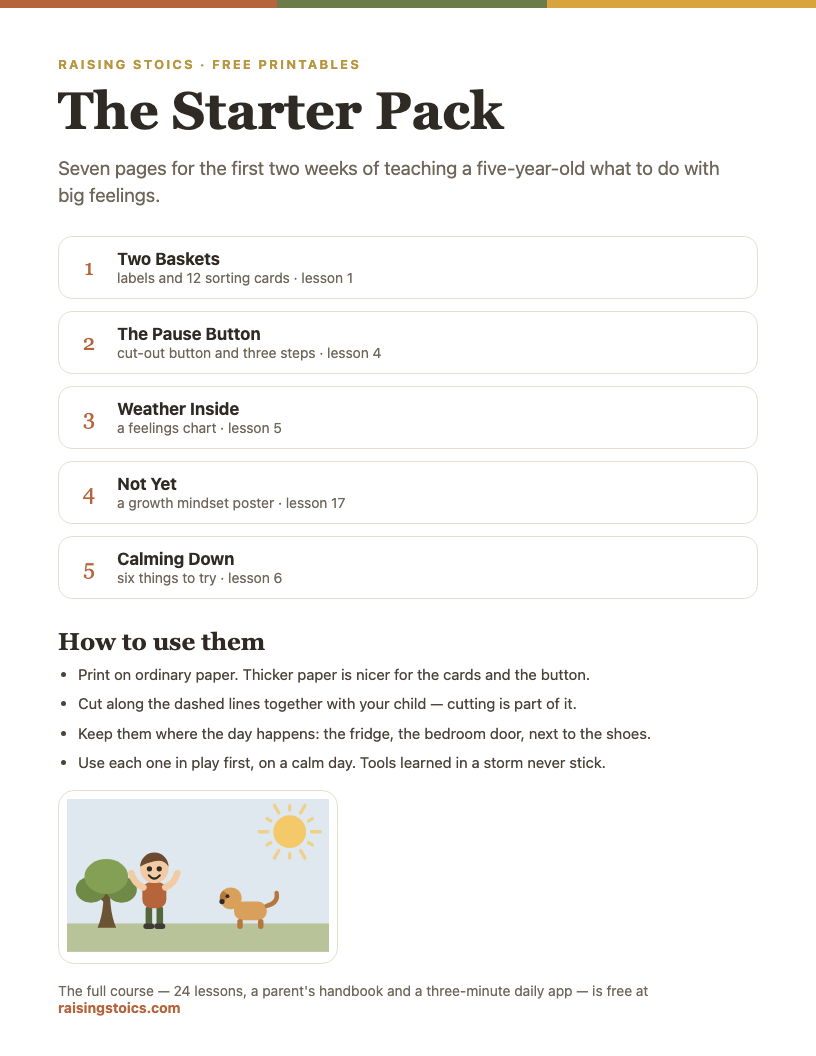
The Big Feelings Starter Pack
Nine pages for the first two weeks: a sorting game, a pause button, a feelings chart and a calm-down poster.
Download the free PDF See all 9 pages
Part of a free 9-page starter pack. Sign in with a code from your email — no password.
Easy kid-friendly dinner ideas for busy weeknights
Short answer: lean on shortcuts that save prep time, not on separate meals.
Weeknight shortcuts many families use:
- Frozen vegetables. Already washed and chopped, easy to portion, and they keep well, so you can use a small amount at a time.
- Canned beans, drained and rinsed, for tacos, quesadillas, chili, and bowls.
- A rotisserie chicken stretched across two dinners: one night with rice and vegetables, the next in wraps or soup.
- Sheet-pan and one-pot meals. Fewer dishes, and the oven does the work while you help with homework.
- Cook once, eat twice. Make a double batch of rice, meatballs, or chili and freeze half.
- A fixed rotation. Taco Tuesday, pasta Wednesday, breakfast-for-dinner Friday. Fewer decisions for you, more predictability for your child.
One food-safety rule worth keeping: refrigerate cooked leftovers within 2 hours, or within 1 hour if the food has been somewhere above 90°F.
One family meal instead of cooking twice
Short answer: serve one meal for everyone, with at least one food your child usually eats built in.
The AAP advises serving one meal for the whole family and resisting the urge to make another meal if a child refuses what's served, since that can encourage picky eating. The same guidance says to include at least one food your child likes at each meal.
In practice, "one meal" can flex a lot:
- Serve it deconstructed. The adult version is a mixed stir-fry; the child gets the noodles, chicken, and carrots in separate piles from the same pan.
- Hold the sauce. Set some plain pasta or rice aside before adding the sauce.
- Add a reliable side. Bread, rice, fruit, or yogurt on the table means no one leaves hungry.
This is also easier on you. Cooking a second dinner every night is tiring, and children quickly learn that refusing the first one brings a backup.
Kid-friendly dinner recipes kids can help make
Short answer: most children ages 4–8 can do real kitchen jobs with supervision, and children who help cook may be more willing to try what they made.
AAP pediatricians note that kids are more likely to eat what they choose or help prepare. They also stress matching tasks to your child's abilities: a 4-year-old may not be ready to sauté vegetables over a hot pan but may be able to rinse fruit or tear salad leaves.
Examples many families use; your child's readiness matters more than their age:
- Ages 4–5: rinse fruits and vegetables, tear lettuce, stir cold ingredients, mash avocado or bananas with a fork, sprinkle cheese on pizzas, put away groceries, set the table.
- Ages 6–7: measure ingredients, crack eggs into a bowl (and wash hands after touching raw egg), assemble wraps and salads, peel fruits like bananas and mandarins, and, with an adult beside them, cut soft foods such as bananas with a kid-safe nylon knife on a stable board.
- Age 8: follow a simple recipe step by step with you nearby, spread and assemble, help plan the week's dinners.
Recipes with a lot of assembly are ideal: tacos, pizzas, wraps, bowls, and salads. Letting your child choose one dinner a week, and help make it, gives them a stake in the meal.
Kitchen safety for young helpers
Short answer: supervise every step, keep young children away from heat and sharp knives, and teach basic food safety as you go.
The AAP recommends always supervising children in the kitchen and showing them how to hold kitchen tools safely, how to use oven mitts, and how to turn appliances on and off.
Knife skills vary a lot from child to child. If your child uses a knife, start with a kid-safe knife, cut away from the hand, and stay within arm's reach.
Basic food safety comes down to four steps: clean, separate, cook, and chill. With kids, that looks like:
- Clean. Wash hands with soap for at least 20 seconds before, during, and after preparing food.
- Separate. Keep raw meat, poultry, and seafood away from other foods, and use a separate cutting board for them. Raw meat is a grown-up job.
- Cook. Use a food thermometer: 165°F for poultry, including ground turkey or chicken, and 160°F for ground beef and pork.
- Chill. Put leftovers in the fridge within 2 hours.
For the youngest helpers, the AAP also lists foods that can be choking risks, such as hot dogs, whole grapes, nuts, and raw carrot sticks. It suggests keeping them from children until age 4 or older, depending on the child, or cutting round, firm foods into tiny pieces. For more ideas, see the AAP's article on cooking with your children.
A sample week of kid-friendly dinner
Short answer: a simple rotation of five or six dinners, with one night of leftovers, covers most weeks.
One example, built from the ideas above:
- Monday: sheet-pan chicken, potatoes, and carrots.
- Tuesday: build-your-own tacos with beans or ground turkey.
- Wednesday: pasta with meatballs and peas; make extra meatballs.
- Thursday: leftover meatballs in wraps, with fruit on the side.
- Friday: mini pizzas that everyone tops themselves.
- Saturday: breakfast for dinner.
- Sunday: soup and grilled cheese, or a rice bowl night.
Keep a short list on the fridge and let your child pick one dinner from it each week. Knowing what's coming can make dinner feel more predictable for a child who finds new foods hard.
Helping at dinner, in the program
Short answer: a job at dinner is one of the easiest ways for a young child to feel useful every day.
In the program, the lesson Stepping In ("We're here to help each other") teaches 5- and 6-year-olds the phrase "I can help." Setting the table, washing the vegetables, or handing out napkins turns that phrase into something they do every evening. Dinner is also a natural place to practice waiting: the lesson Boss of My Want ("I want it now," and learning to wait) gives children simple tricks for waiting, like counting, singing, or keeping their hands busy, which come in handy while the food is still cooking.
For how dinners fit with snacks, lunches, and breakfasts, see our food for kids guide. For packed-lunch ideas that use the same build-your-own approach, see lunch ideas for kids.
What parents ask
Paraphrased from questions parents often post on Reddit, Mumsnet, BabyCenter, and other parenting forums.
“My 4-year-old won't sit at the table for more than a few bites. Is that normal?”
Short answer: it's common at this age. Many families keep dinner short, sit down together, and let a young child leave the table once they say they're done; some ask them to stay a little longer for family talk. A job at dinner, like handing out napkins, may help a child feel part of the meal rather than stuck at it.
“Should young kids eat dinner earlier than the adults?”
Short answer: families do both. A young child may be very hungry by late afternoon, and some families feed children earlier and sit with them. Others plan an after-school snack so everyone can eat together later. Eating together, even on some nights, gives children a chance to see the adults eat and enjoy the same food.
“One of my kids eats everything and the other eats almost nothing. How do I cook for both?”
Short answer: build-your-own dinners often work here: tacos, bowls, wraps, or pizzas with the parts in separate bowls. Everyone takes the base and at least one topping, and the rest is up to them. Make sure at least one food the choosier child usually eats is on the table, and avoid comparing the two children's plates.
FAQ
What to make for dinner tonight that's kid-friendly?
For a fast kid-friendly dinner tonight, try quesadillas, breakfast for dinner, or pasta with a vegetable on the side. All three are quick and use ingredients many families keep on hand: tortillas, cheese, eggs, pasta, frozen vegetables, and canned beans. Serve the parts separately so your child can choose, and add one food you know they usually eat.
What can I make for dinner that kids will eat?
Kids are more likely to eat dinners that are familiar, mild, and served in separate parts they can choose from. Tacos, rice bowls, pasta, mini pizzas, and breakfast for dinner work for many families. Include at least one food your child usually eats, offer new foods in small amounts without pressure, and let them help prepare part of the meal when you can.
What is a healthy dinner for a 5-year-old?
A healthy dinner for a 5-year-old includes vegetables or fruit, a protein food, and a grain, ideally a whole grain, much like an adult plate in smaller amounts. Earlier MyPlate advice suggested making half the plate fruits and vegetables; the 2025–2030 guidelines focus on whole, nutrient-dense foods. Water or milk works well as a drink. How much a child eats can vary a lot from day to day, and that's normal.
How do I get my child to eat dinner?
You can't make a child eat, but you can make dinner easier to join. Serve meals at regular times, limit snacks right before dinner, and include one food your child usually eats. Let them decide how much to eat from what's offered, and skip bribes and "clean plate" rules, which the AAP says can backfire. If eating seems very limited, talk to your pediatrician.
Picky Eater? What Helps a Child Who Eats Only a Few Foods
Picky eater at home? Why kids ages 4–8 refuse new foods, what helps them try, a food list, dinner ideas, and a quick check for when to call the pediatrician.
Read next →The program's lessons Stepping In and Boss of My Want help 5- and 6-year-olds practice helping out and waiting, two skills that show up at every family dinner.