 Raising
Picky Eater? What Helps a Child Who Eats Only a Few Foods
If you searched "picky eater" after another dinner of plain pasta, you're far from alone. Many children ages 4–8 eat only a few foods for a while, and the AAP calls picky eating typical in young children and says eating behaviors tend to level out over time. This guide covers why it happens, what tends to help, what tends to backfire, and the signs that are worth a call to your pediatrician.

Why is picky eating so common at ages 4–7?
Short answer: because wariness of new food is a normal part of development, and for some children it continues into kindergarten.
The American Academy of Pediatrics (AAP) notes that between 18 months and 2 years, many children start to dislike unfamiliar foods, a pattern researchers call food neophobia. AAP pediatricians also describe preschoolers as judging food as "good" or "bad" by how it looks, feels, or smells. At the dinner table, it shows up as a child who won't touch anything green, lumpy, or mixed together.
A few other things may add to it at this age:
- Texture and smell. Some children react strongly to slimy, crunchy, or mixed textures and to strong smells.
- Control. Some children may turn food into a contest when they feel pressured.
- Appetite that varies. Children may eat a lot one day and very little the next.
None of this means you're doing something wrong. It means the approach matters more than the amount eaten at any one meal.
The division of responsibility: your job and their job
Short answer: you decide what, when, and where food is served; your child decides whether to eat and how much.
This split is called the division of responsibility in feeding. It was developed by dietitian and family therapist Ellyn Satter. The AAP describes a similar split: it's a parent's responsibility to provide food, and the child's decision to eat it.
In practice:
- Your part: regular meals and snacks at predictable times, at the table, without screens. A balanced meal that includes at least one food your child usually eats.
- Their part: what goes into their mouth from what's on the table, and when they've had enough.
The hard part is letting go of the second half. A child who ate two bites of chicken and a whole roll has done their job. Many parents find that once mealtimes stop being a negotiation, children become a little more willing to explore on their own.
Why one taste isn't the end of the story
Short answer: many children need to meet a new food again and again before they accept it, so a "no" today is information, not a final verdict.
AAP pediatricians writing on HealthyChildren.org say it can take children 15–20 tries to like a new food. Another AAP page says 13 or more, and the 2025–2030 Dietary Guidelines mention 8 to 10 exposures for infants and toddlers. The exact number varies by child; the point is that it's a lot more than two or three.
What counts as a try is broader than you might think. AAP pediatricians list having it on the plate, touching it, smelling it, licking it, and chewing and spitting it out politely, along with eating it. A child who sniffed a strawberry on Monday and licked one on Wednesday is making progress, even if they swallowed nothing.
Serve new foods in tiny amounts, alongside familiar ones, and bring them back every week or two. Keep your face neutral when they're refused. The goal is for the food to become ordinary.
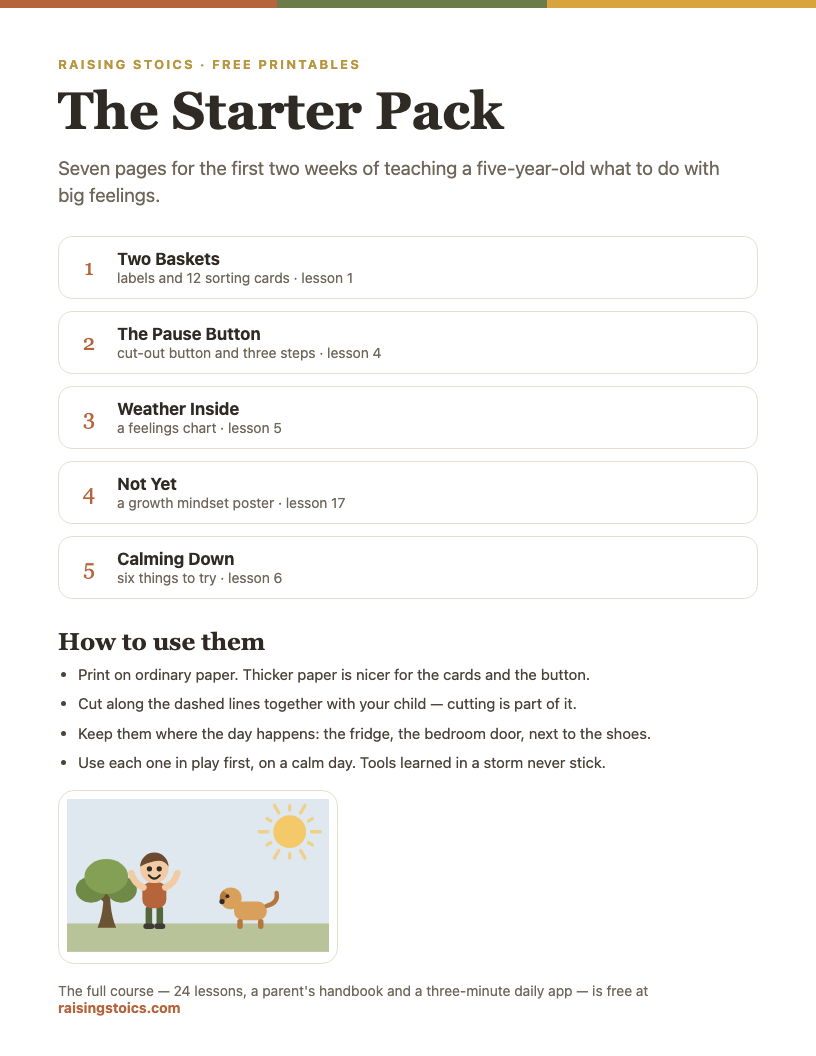
The Big Feelings Starter Pack
Nine pages for the first two weeks: a sorting game, a pause button, a feelings chart and a calm-down poster.
Download the free PDF See all 9 pages
Part of a free 9-page starter pack. Sign in with a code from your email — no password.
Put one safe food on the plate
Short answer: include at least one food your child usually eats at every meal, so they never sit down to a plate with nothing they can manage.
AAP pediatricians recommend this directly. A "safe food" is simply something your child reliably eats: rice, bread, a fruit they like, plain pasta, yogurt. It goes on the plate next to whatever the family is having, not instead of it.
The safe food does two jobs. It means your child won't leave the table hungry, which lowers the stakes for everyone. And it makes the new or less-liked food easier to sit next to. A child who knows there's bread on the plate can afford to poke the broccoli.
What the AAP advises against is the opposite: cooking a separate meal on request when a child refuses what's served. One family meal with a safe food built in is a middle path between "eat it or starve" and short-order cooking.
Skip bribes, rewards, and the "clean plate" rule
Short answer: pressure, even friendly pressure, tends to make the target food less appealing.
The AAP advises against bribing children with treats for eating other foods. Dessert as a prize makes the prize feel even more exciting and the vegetable feel like a chore. It can also turn dinner into a nightly negotiation.
The same goes for "three more bites," "you can't leave until your plate is clean," and punishing a child for not eating. AAP pediatricians note that pressuring children to eat, or punishing them if they don't, can make them actively dislike foods they might otherwise come to like. Clean-plate rules also ask a child to ignore their own fullness signals, which is the opposite of what you want long term.
What to do instead:
- Praise curiosity, not quantity. "You smelled the mango. What did it smell like?"
- Let "no thank you" be allowed. A small "no thank you" bowl gives refused food somewhere to go.
- Eat it yourself, and enjoy it. Children often copy what the adults around them eat.
Picky eater test or real concern? When to talk to your pediatrician
Short answer: most choosy eating is a normal phase, but some signs are worth a conversation with your pediatrician. This short self-check is not a diagnosis. It's a way to notice patterns.
Think about the last few weeks and check any that fit:
- The list of foods is shrinking. Your child accepts fewer foods than a few months ago, and foods keep dropping off.
- Weight or growth has changed. They've lost weight, or your pediatrician has mentioned slower growth.
- Very few foods are accepted at all, and whole kinds of food are refused.
- Gagging, coughing, or vomiting happens with certain foods, their smell, or their texture.
- Fear around eating. They seem afraid of choking or throwing up.
- Strong distress at meals. Crying, panic, or meltdowns when a non-preferred food is on the table, most days.
- Little interest in eating or very low appetite most of the time.
- Pickiness affects daily life. They can't eat at school, parties, or a friend's house, or family life is organized around their food.
The National Institute of Mental Health lists signs of a feeding and eating condition called ARFID, including a range of preferred foods that keeps getting more limited, lack of appetite or interest in food, weight loss, changes in growth, and problems with daily life. It also notes that people with ARFID may limit food because of fear of choking or vomiting, or because they dislike a food's look or texture. Those signs can have other causes too, which is why the next step is a professional, not a search engine.
This isn't a diagnosis. Talk to your pediatrician if you notice weight loss or poor growth, a very small number of accepted foods, gagging or choking with food, distress at meals, or pickiness that affects daily life. If none of these fit, this may be ordinary choosy eating, and the strategies on this page are a good place to start. Any worry about your child's eating is reason enough to ask.
A picky eater food list to start from
Short answer: start with foods that are mild, plain, and easy to recognize, then offer "bridge" foods that are close to what your child already eats.
This isn't a list of foods a child should eat. It's a list of common starting points that many children who eat only a few foods accept, grouped so you can build a balanced plate from them:
- Grains: plain pasta, rice, toast, crackers, oatmeal, tortillas, pancakes.
- Protein foods: scrambled eggs, chicken strips, meatballs, beans, cheese, peanut butter (if no allergy), plain yogurt.
- Fruits: bananas, apple slices, berries, grapes cut lengthwise into quarters, mandarin segments.
- Vegetables: cucumber, corn, peas, carrots (cooked soft for younger children), sweet potato fries.
- Dips: hummus, yogurt dip, mild salsa, ketchup. A familiar dip can make a new vegetable easier to try.
To widen the list, change one thing at a time. If they eat plain pasta, try pasta with butter, then with a little cheese, then a different shape. If they eat apple slices, try a pear sliced the same way. Small, predictable changes tend to feel safer than a brand-new dish.
Picky eater dinner ideas and meals for picky eaters
Short answer: the easiest meals for a child who eats only a few foods let each person put their own plate together from a few separate parts.
A few dinner formats that often work:
- Build-your-own tacos or wraps. Tortillas, a protein, cheese, and two or three toppings in separate bowls.
- Rice or noodle bowls. Plain rice or noodles as the base, with chicken, tofu, or egg and a few vegetables on the side.
- Mini pizzas. Whole-wheat English muffins or tortillas, sauce, cheese, and toppings they choose.
- Breakfast for dinner. Eggs, toast, fruit, and pancakes.
- Deconstructed plates. Pasta, sauce, meatballs, and peas all served separately instead of mixed.
In each case, the safe food is built in and the new food is one small option among several. For more weeknight formats, see our kid friendly dinner ideas.
"Not yet" and the bravery ladder: trying a bite as practice
Short answer: treat tasting as practice, not a test, and break "try it" into steps small enough to succeed.
In the program, the lesson Not Yet ("A mistake is practice, not a verdict") teaches children to add one word to "I can't": yet. It works for food too. "I don't like it" becomes "I don't like it yet." That small word leaves the door open without forcing anything, and it's a phrase a 5-year-old can say for themselves.
The Bravery Ladder ("One small step into the fear") breaks a scary thing into rungs and does one rung at a time. For a new food, the ladder might be:
1. It sits on the table. 2. It sits on their plate. 3. They touch it or help prepare it. 4. They smell it. 5. They lick it or touch it to their lips. 6. They take a tiny bite, and can spit it into a napkin.
Let your child choose the rung and stop there. Stopping while it still feels like a success is what makes the next try easier. The research behind this kind of gradual, step-by-step approach to fears is summarized in our page on the fear ladder. For how picky eating fits with snacks, lunches, and dinners, see the food for kids guide.
What parents ask
Paraphrased from questions parents often post on Reddit, Mumsnet, BabyCenter, and other parenting forums.
“My 5-year-old has eaten nothing but crackers for days. Should I panic?”
Short answer: stretches like this are common, but keep offering regular meals and snacks, each with at least one food your child usually eats and a small amount of something else. Skip pressure and bribes. Talk to your pediatrician if you notice weight loss, slower growth, or a shrinking list of foods, or if you're simply worried. Any concern is reason enough to ask.
“My kid complains about dinner every single night. Do I just cook what they like?”
Short answer: the AAP advises against cooking a separate meal on request. Instead, serve one family meal with at least one food your child usually eats built in, so no one leaves hungry. A calm "You don't have to eat it" may take the fight out of dinner. Build-your-own formats often help; see kid friendly dinner ideas.
“Grandparents keep pushing 'just one more bite.' How do I handle it?”
Short answer: share your plan in a sentence: "We're trying no pressure at meals." Pressure, even friendly pressure, tends to make a food less appealing. Give grandparents something else to do instead: eat the new food themselves and enjoy it, or praise curiosity, like smelling or touching it, rather than how much was eaten.
“Should dessert depend on whether they ate dinner?”
Short answer: the AAP advises against bribing children with treats for eating other foods. Dessert as a prize may make it feel more exciting and make the vegetables feel like a chore. Many families decide when dessert happens, if at all, separately from how much dinner was eaten, so it stops being something to bargain over.
FAQ
What is a picky eater?
A picky eater is the common name for a child who accepts a limited range of foods and refuses many new or disliked ones. It isn't a diagnosis. The AAP calls picky eating typical for toddlers and says eating behaviors tend to level out over time. Many children gradually accept more foods with repeated, low-pressure exposure.
When does picky eating stop?
There's no set age when picky eating stops, and it varies a lot from child to child. The AAP says eating behaviors tend to level out over time, and many children gradually widen what they eat as they get older. Repeated exposure without pressure, family meals, and involving children in cooking may help. If the list of accepted foods is shrinking instead, talk to your pediatrician.
Is picky eating a disorder?
Picky eating on its own is not a disorder. The National Institute of Mental Health describes a separate condition, avoidant/restrictive food intake disorder (ARFID), with much more severe restriction and effects such as weight loss, changes in growth, malnutrition, or trouble with daily life. One sign it lists is picky eating that keeps getting worse. Only a health professional can assess it.
Is picky eating a sign of autism?
Many children without autism are picky eaters. The CDC lists unusual eating habits, and unusual reactions to how things taste, smell, look, or feel, among characteristics that can come with autism, and notes that children may not show all or any of them. Food habits alone don't tell you much. If you're concerned about your child's development, ask your pediatrician.
Food for Kids 4–8: Snacks, Lunches, Dinners, and Picky Eating
Food for kids ages 4–8 in one place: balanced-plate basics, snacks, lunches, breakfasts, easy family dinners, and help for a child who eats only a few foods.
Read next →The program's lessons Not Yet and The Bravery Ladder turn "just try it" into small, brave steps a 5- or 6-year-old can practice at the table and beyond.
What the research says
- How many times should you offer a new food? What the research on repeated exposure shows · Study brief
- Picky eating in children: what the research says about how common it is and how long it lasts · Study brief
- Added sugar for kids: what the guidelines say, where they differ, and what studies found · Study brief