 Raising
Food for Kids 4–8: Snacks, Lunches, Dinners, and Picky Eating
Food for kids ages 4–8 doesn't need to be complicated, but it does need to work on a school morning and a tired weeknight. This guide collects our practical articles on snacks, lunches, breakfasts, dinners, and picky eating, with a short summary of each and the official basics they build on.

Healthy food for kids: the basics
Short answer: a variety of vegetables, fruits, whole grains, protein foods, and dairy, with as little added sugar as possible.
For years, the USDA's MyPlate guide was the familiar picture for families, with messages like making half the plate fruits and vegetables, choosing whole grains, varying protein foods, and offering water or milk when children are thirsty.
In January 2026, the Dietary Guidelines for Americans, 2025–2030 introduced a new pyramid graphic, and MyPlate is no longer the main picture. The new guidelines still center vegetables, fruits, protein foods, dairy, and whole grains, urge limiting highly processed foods, and say no amount of added sugars is recommended for children ages 5–10.
Guidance on milk fat differs: the 2025–2030 guidelines favor full-fat dairy for children, while AAP pages for preschoolers suggest skim or 1% milk. Ask your pediatrician which fits your child.
How much a child needs depends on age, size, and activity, and a young child's appetite can vary a lot from day to day.
Healthy snacks for kids
Snacks fill the long gaps in a young child's day, especially after school. Our guide to healthy snacks for kids has easy snack ideas built from everyday foods. Many pediatricians suggest scheduled meals and fewer snacks right before them, so children come to the table hungry.
Lunch ideas for kids
Packed lunches have to survive a backpack and a busy lunch period. Our lunch ideas for kids cover school lunches, cold lunches, and options for children who don't like sandwiches.
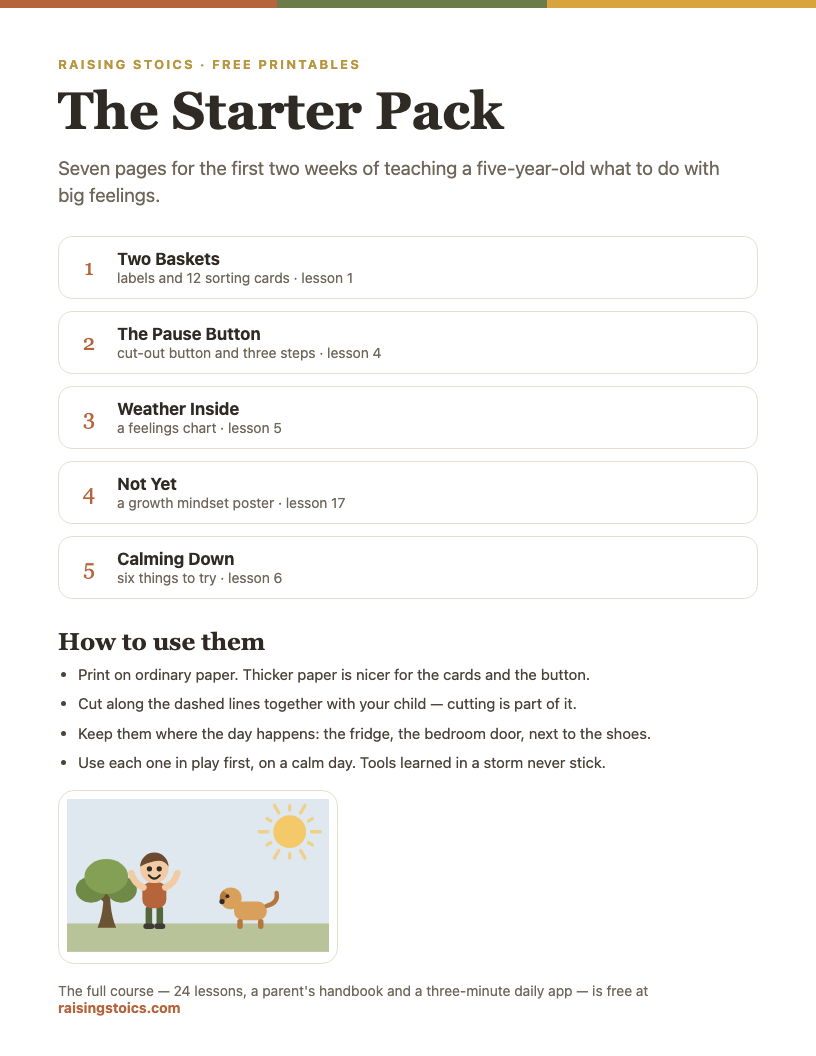
The Big Feelings Starter Pack
Nine pages for the first two weeks: a sorting game, a pause button, a feelings chart and a calm-down poster.
Download the free PDF See all 9 pages
Part of a free 9-page starter pack. Sign in with a code from your email — no password.
Breakfast ideas for kids
School mornings are short, so breakfast needs to be quick and filling. Our breakfast ideas for kids collect quick, simple options for busy school mornings.
Kid-friendly dinner ideas
Dinner is often the hardest meal: everyone is tired and it's late. Our kid-friendly dinner ideas focus on meals the whole family eats, build-your-own tacos and bowls, weeknight shortcuts, and kitchen jobs children ages 4–8 can safely help with.
Picky eating: a child who eats only a few foods
Many young children go through a stretch of eating only a few foods. Our guide for a picky eater explains why it's common, why one taste isn't the end of the story, and what tends to backfire. It also includes a short self-check for when to talk to your pediatrician.
Food and self-control: waiting, trying, and being the boss of a want
Short answer: meals are a daily, low-stakes place to practice two skills that matter well beyond food: waiting for something, and trying something new.
Waiting. Waiting for dinner instead of grabbing a snack, or saving a treat for later, is hard at 5. In the program, the lesson Boss of My Want ("I want it now," and learning to wait) teaches children that waiting is a set of tricks, not pure willpower: look away, sing, count, or keep their hands busy. The lesson draws on the classic delayed-gratification research we describe in the marshmallow test.
Trying. Tasting a new food takes a small amount of courage. The lessons Not Yet ("A mistake is practice, not a verdict") and The Bravery Ladder ("One small step into the fear") help children treat a first bite as practice and break it into steps they choose.
One caution: keep treats out of the reward system for eating. The AAP advises against bribing children with treats to eat other foods, because it can make the vegetable feel like a chore and the prize even more exciting.
For quick facts on common snacks, see our Snack check: each card shows added sugar, processing, protein and fiber, and choking risk, with sources. How we check every food fact is on our sources page.
FAQ
What is healthy food for kids?
Healthy food for kids is mostly the same as for adults, in smaller amounts: vegetables, fruits, whole grains, protein foods such as beans, eggs, fish, and meat, and dairy. Earlier MyPlate advice suggested making half the plate fruits and vegetables; the 2025–2030 guidelines focus on whole, nutrient-dense foods and advise keeping added sugars and highly processed foods to a minimum, especially for children.
How can I get my child to eat healthier food?
Offer healthy foods regularly, eat them yourself, and keep the pressure low. AAP pediatricians recommend serving one family meal that includes at least one food your child likes, and offering new foods again even after a refusal. Children who help choose or cook food may be more willing to try it. Bribes and "clean plate" rules tend to backfire.
Should kids eat the same food as adults?
In most cases, yes. The AAP recommends serving one meal for the whole family rather than cooking a separate meal when a child refuses what's served. You can still adapt it: serve parts separately, keep sauces on the side, and include one food your child usually eats. For younger children, cut round, firm foods like grapes and hot dogs into small pieces to reduce choking risk.
Picky Eater? What Helps a Child Who Eats Only a Few Foods
Picky eater at home? Why kids ages 4–8 refuse new foods, what helps them try, a food list, dinner ideas, and a quick check for when to call the pediatrician.
Read next →The program's lessons Boss of My Want, Not Yet, and The Bravery Ladder help 5- and 6-year-olds practice waiting and trying new things, at the table and everywhere else.
What the research says
- How many times should you offer a new food? What the research on repeated exposure shows · Study brief
- Picky eating in children: what the research says about how common it is and how long it lasts · Study brief
- Added sugar for kids: what the guidelines say, where they differ, and what studies found · Study brief