 Raising
Breakfast Ideas for Kids: Easy Mornings for Ages 4–8
School mornings are short, and breakfast is often the first thing to go. These breakfast ideas for kids ages 4–8 are built for real mornings: food you can make in five minutes or the night before, with protein to last until lunch. You'll also find what to do when your child isn't hungry at 7 a.m., and how school breakfast fits in.

Breakfast ideas for kids: what to aim for
Short answer: Aim for a protein food plus a fruit or vegetable, with a whole grain or dairy if there's room. Eggs and toast with fruit, plain yogurt with berries and oats, or a whole-grain tortilla with cheese and an apple all fit.
The Dietary Guidelines for Americans, 2025–2030 ask families to prioritize protein foods at every meal and, for children ages 5–10, to focus on whole, nutrient-dense foods such as protein foods, dairy, vegetables, fruits, healthy fats, and whole grains. They also say no amount of added sugars is recommended for children that age.
The AAP's HealthyChildren.org makes a practical point about protein in the morning: it can help keep a child from feeling hungry again soon. Protein foods that work at breakfast include eggs, milk, plain yogurt, cheese, nut or seed butter, beans, and leftover chicken or fish.
Breakfast doesn't have to look like breakfast. Leftover rice and beans, a bowl of soup, or last night's pasta are all fine morning meals if your child will eat them.
Easy breakfast ideas for kids (five minutes or less)
These need no recipe and little cleanup.
1. Whole-grain toast with a thin layer of peanut butter or sunflower seed butter, and banana slices 2. Plain yogurt with berries and a spoonful of oats or whole-grain cereal 3. Scrambled egg with whole-grain toast and a few orange segments 4. Whole-grain tortilla with melted cheese, folded in half, with apple slices 5. Bowl of whole-grain cereal with milk and fruit on top 6. Cottage cheese with peaches or pineapple 7. Hard-boiled egg (made ahead), cheese, and whole-grain crackers 8. Smoothie: milk or plain yogurt blended with frozen fruit 9. Leftovers from dinner, warmed up
Keep two or three of these in steady rotation. A short, predictable menu means fewer decisions at 7 a.m., for you and for your child.
Make-ahead kids breakfast ideas
A little prep on the weekend can cover several weekday mornings.
Overnight oats. Mix oats with milk or plain yogurt in small jars, add fruit, and refrigerate. In the morning it's ready cold, or warm it briefly.
Egg muffins. Beat eggs with chopped vegetables and cheese, bake in a muffin tin, and refrigerate. Reheat one or two in the morning.
Batch pancakes or waffles. Make a whole-grain batch on the weekend, freeze them in a single layer, and toast from frozen.
Hard-boiled eggs. Boil several at once and keep them in the fridge, peeled or not.
Breakfast burritos. Scrambled egg, beans, and cheese in a whole-grain tortilla, wrapped and frozen, then warmed through.
Cut fruit. Wash and cut melon, pineapple, or strawberries for several days at a time.
The night before, set the table with bowls and spoons and put the cereal or oats out. Children who can see breakfast waiting are often quicker to sit down.
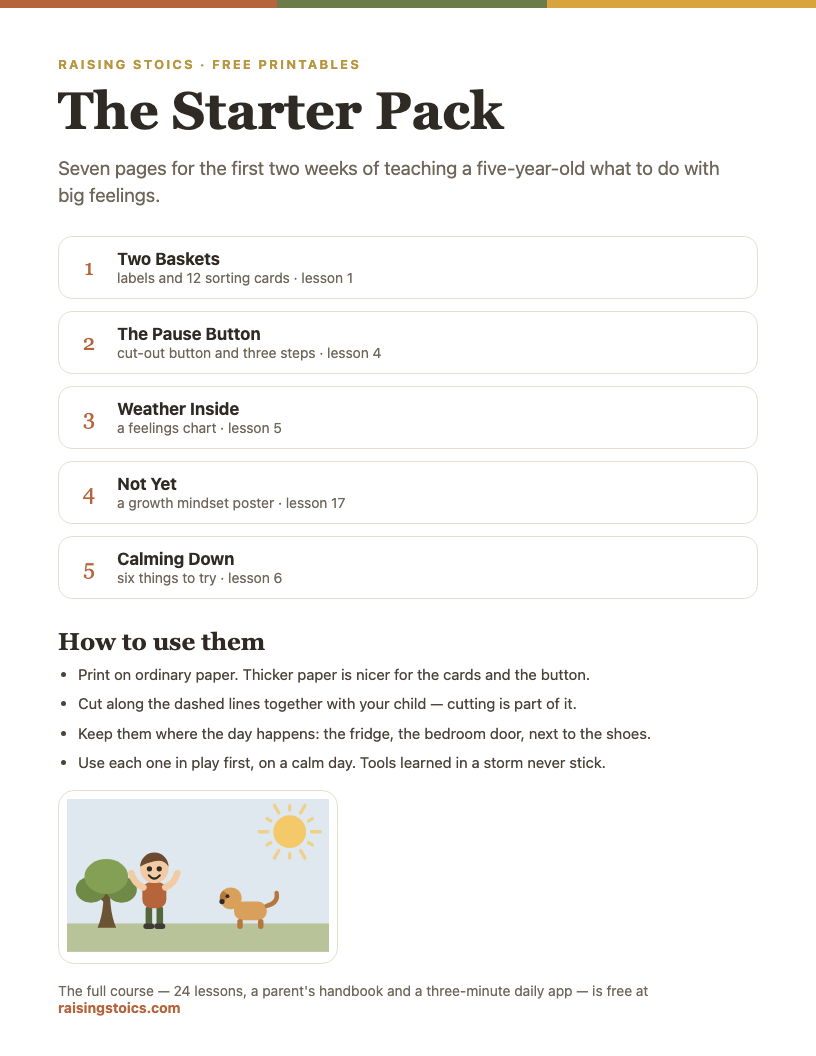
The Big Feelings Starter Pack
Nine pages for the first two weeks: a sorting game, a pause button, a feelings chart and a calm-down poster.
Download the free PDF See all 9 pages
Part of a free 9-page starter pack. Sign in with a code from your email — no password.
Healthy breakfast for kids: cereal, pastries, and added sugar
Short answer: A healthy breakfast for kids is mostly whole foods with little or no added sugar. Sweetened cereals, pastries, and breakfast bars are where added sugar most often shows up in the morning.
The 2025–2030 Dietary Guidelines name "ready-to-eat or packaged breakfast options" among the refined carbohydrates to cut back on, and suggest fiber-rich whole grains instead. They also say a single meal should contain no more than 10 grams of added sugars, while stating that no amount of added sugars is recommended for children ages 5–10. Even whole-grain packaged cereals fall under those "ready-to-eat or packaged breakfast options"; oats, eggs, and plain yogurt are less processed choices.
You don't need to ban cereal. A few practical steps: - Read the ingredient list. The guidelines suggest looking for words with "sugar" or "syrup," or ending in "-ose." Honey and fruit juice concentrate are added sugars, too. - Choose plain versions and add sweetness with fruit: plain oats with banana, plain yogurt with berries. - Add protein. Cereal with milk and a hard-boiled egg holds a child longer than cereal on its own. - Offer water or milk instead of juice. The guidelines say 100% juice should be limited or diluted with water.
No single breakfast decides your child's health. What matters more is the pattern across most mornings.
Rushed school mornings: a plan that works
Most breakfast problems are really time problems. A few changes make a difference.
Start the night before. Lay out clothes, pack the backpack and lunch, and set out bowls. Every task moved to the evening is one less thing competing with breakfast.
Look at bedtime. HealthyChildren.org suggests making sure your child gets to bed early enough to get up in time for breakfast. A late bedtime and a rushed morning can leave no time to eat, so bedtime is part of the breakfast plan.
Eat first, screens later. Many families find breakfast goes faster when the tablet and TV stay off until everyone is dressed and fed.
Sit down together, even briefly. Many children eat better at the table, with you nearby, than on the way out the door.
Have a plan B. On the worst mornings, a banana, a cheese stick cut into thin strips or small pieces, and a few whole-grain crackers in a bag is still breakfast. Eat it seated, not while walking.
A steady morning routine is also part of getting ready for school. Our kindergarten readiness checklist covers the rest of that routine.
When your child isn't hungry in the morning
Short answer: Offer something small rather than nothing, and send a second option for later. HealthyChildren.org puts it simply: any effort to make breakfast nutritious is better than no breakfast at all.
Some children wake up without an appetite. A few things to try:
- Shrink the portion. Half a slice of toast and a few bites of egg may be all your child wants, and that's still breakfast.
- Drink it. Milk or a smoothie made with milk or yogurt and fruit is easier for some children than chewing early in the morning.
- Give it time. Offer breakfast after dressing and teeth brushing instead of right after waking up.
- Pack a second breakfast. A piece of fruit and a cheese stick for the car or school, where allowed, catches the appetite that arrives later.
- Check the evening. A late, large snack or dinner may leave some children less hungry in the morning.
- Don't force it. Pressure tends to make mornings tense without making children hungrier.
If your child is rarely hungry at any meal, or you have questions about growth or weight, talk to your pediatrician.
Breakfast at school
HealthyChildren.org notes that most schools have breakfast available, and that eating breakfast at school has many advantages. If your child isn't hungry at home, breakfast at school may fit better, because it comes later in the morning.
Check what your child's school or kindergarten offers, when it's served, and whether your child needs to arrive early to get it. Some young children need practice with the routine: where to go, how to get a tray, and how long they have.
If the school doesn't offer breakfast, a small breakfast at home plus a snack your child can eat at school, if allowed, is another way to cover the morning. Our healthy snacks for kids guide has ideas that travel well.
Picky eaters and breakfast
For many picky eaters, breakfast is the meal they accept most reliably. Many have one or two breakfasts they'll eat, and that's a reasonable place to start.
Keep the familiar breakfast and add a small piece of something new on the side, a few blueberries or a quarter of an egg, without asking them to eat it. Many children need to meet a new food many times before they accept it. Estimates vary: AAP pediatricians mention 13 or more exposures, or 15 to 20 tries, and the 2025–2030 Dietary Guidelines mention 8 to 10 exposures for infants and toddlers.
When your child says "I don't like that," you can answer "Not yet," and leave it. Tasting something new is a small brave step for a 4- or 5-year-old, whether or not they like it.
Let your child choose between two options. Many children are more willing to eat something they've chosen themselves. Our guide to the picky eater covers what's typical and when to talk to your pediatrician.
"I want pancakes now!": waiting for breakfast
Hungry children often want food immediately, especially in the morning. A few minutes of waiting while eggs cook can feel very long to a 5-year-old.
What helps: - Say when, not just no. "Eggs in three minutes. You can set out the forks." - Offer something to start. A few slices of fruit on the table while the rest cooks. - Give them a job. Cracking an egg into a bowl, stirring oats, or pouring milk from a small pitcher keeps hands busy and makes the wait shorter. - Notice the wait afterward. "You waited for the pancakes, and they were ready."
Waiting for something you want is a skill a child builds with practice. Breakfast offers a small chance to practice it every day.
Safety and allergies at breakfast
Choking risk is highest for children under 4, but the AAP notes that readiness for higher-risk foods depends on each child's development. At breakfast: - Spread nut butters thinly, never by the spoonful. - Cut whole grapes lengthwise into quarters, and cut sausages lengthwise into strips, then small pieces. - Have your child sit at the table to eat, not walk around with food.
If your child has a food allergy, check labels on cereals, breads, and baked goods, which may contain milk, eggs, wheat, soy, nuts, or sesame. The FDA recognizes nine major food allergens: milk, eggs, fish, crustacean shellfish, tree nuts, peanuts, wheat, soybeans, and sesame. For more on breakfast and learning, see the AAP's Breakfast for Learning. For lunch, see our lunch ideas for kids, and for the whole topic, our hub on food for kids 4–8.
What parents ask
Paraphrased from questions parents often post on Reddit, Mumsnet, BabyCenter, and other parenting forums.
“My kid will only eat sugary cereal in the morning. Do I just give in?”
Short answer: you don't have to ban it to change the pattern. Try offering two options you're happy with, add a protein such as milk, yogurt, or a hard-boiled egg, and sweeten plain versions with fruit. Some parents serve the favorite cereal next to a plain one. Changing one thing at a time may go more smoothly than a sudden switch.
“Every morning is a fight about getting dressed, so there's no time left for breakfast.”
Short answer: many parents move decisions to the night before: clothes picked out, backpack packed, bowls on the table. Offer two outfit choices instead of an open question. Some families serve breakfast first and get dressed after, or the other way around; pick the order that leaves less to argue about, and keep screens off until both are done.
“My child takes forever to eat breakfast, and we're always late.”
Short answer: try a smaller portion, sit down together so breakfast feels like a meal rather than a task, and keep the TV off. Offering breakfast after dressing, rather than right after waking, may help some children eat faster. On rushed days, pack a simple second breakfast for school, where allowed, rather than eating in the car or on the walk.
FAQ
What is a good breakfast for a 5-year-old?
A good breakfast for a 5-year-old includes a protein food, such as an egg, plain yogurt, milk, or cheese, plus a fruit and a whole grain. Scrambled egg with whole-grain toast and orange segments, or yogurt with berries and oats, are simple examples. Portions can be small; many young children eat more at some meals than others.
Is it OK for kids to skip breakfast?
Occasionally skipping breakfast is common, but it's better to offer something small than nothing. HealthyChildren.org reports that 13% of school-aged kids skip breakfast (the page doesn't give a year) and notes that breakfast has been associated with many benefits. If your child often isn't hungry, try a smaller breakfast, a later one at school, or a snack packed for mid-morning.
Are smoothies a good breakfast for kids?
A smoothie made with milk or plain yogurt and whole fruit can be a good breakfast, especially for children who aren't hungry early. The dairy adds protein, and blending whole fruit keeps its fiber. Skip added sweeteners and fruit juice as a base, and serve it with a piece of toast if your child is hungry.
Is it OK to eat breakfast in the car?
It's best kept for occasional mornings. The AAP asks that children sit down to eat, and in a moving car no one can watch closely. On a rushed day, choose soft foods that aren't on choking-hazard lists, such as a banana or a whole-grain muffin, and skip whole grapes, nuts, and hard foods. Breakfast at the table, or a snack at school where allowed, is the safer routine.
Kid-Friendly Dinner Ideas: Easy Meals the Whole Family Eats
Kid-friendly dinner ideas for ages 4–8: build-your-own tacos and bowls, weeknight shortcuts, one meal for everyone, and kitchen jobs kids can safely help with.
Read next →Waiting for breakfast and tasting one new food are everyday practice for two lessons of the program: lesson 13, "Boss of My Want," and lesson 17, "Not Yet."