 Raising
Whining Child: Why Kids Whine and How to Stop Whining Calmly
"But I wa-a-ant it." A whining child can wear down the most patient parent by late afternoon. Whining is common at ages 4–7, and it often has a few simple causes. Here's what's behind it, and how to stop whining without nagging or giving in.

Why your child whines
Short answer: whining is often a sign that a child is tired, hungry, bored, or disappointed, and that whining has worked before. The sound is hard to ignore, which is part of why it works so well.
At ages 4–7, children may want things intensely and have little patience for waiting. When a request in a regular voice doesn't get results quickly, a whine is a natural next step. Some children may whine more during changes, such as when screen time is cut back, and some parents notice a burst of whining before things settle. Whining isn't a flaw in your child's character. It can become a habit, and habits can change.
What parents argue about
Ignore it or answer it. On parenting forums, some parents don't respond to a whine at all until the voice changes. Others say ignoring a tired or hungry child misses the real problem, and they meet the need first.
Sticker chart or not. Some parents use a chart for one habit, like asking in a regular voice. Others worry that charts reward the wrong thing or stop working once the stickers do.
What gets the most agreement: don't react to the whine itself, ask your child to try again in a regular voice, and respond warmly when the regular voice shows up.
What to do today with a whining child
1. Show the voice you want. At a calm time, demonstrate a whiny voice and a regular voice, and make it silly. Say: "This is my whiny voice. This is my regular voice. Which one is easier to hear?" 2. Use one short phrase, then wait. When the whine starts, don't explain or argue. Say: "Try again in your regular voice." 3. Make your yes or no real. If it's a yes, say yes as soon as the regular voice arrives. If it's a no, say so once, kindly, and don't change it because of more whining. Say: "The answer is no, and it's okay to be disappointed."
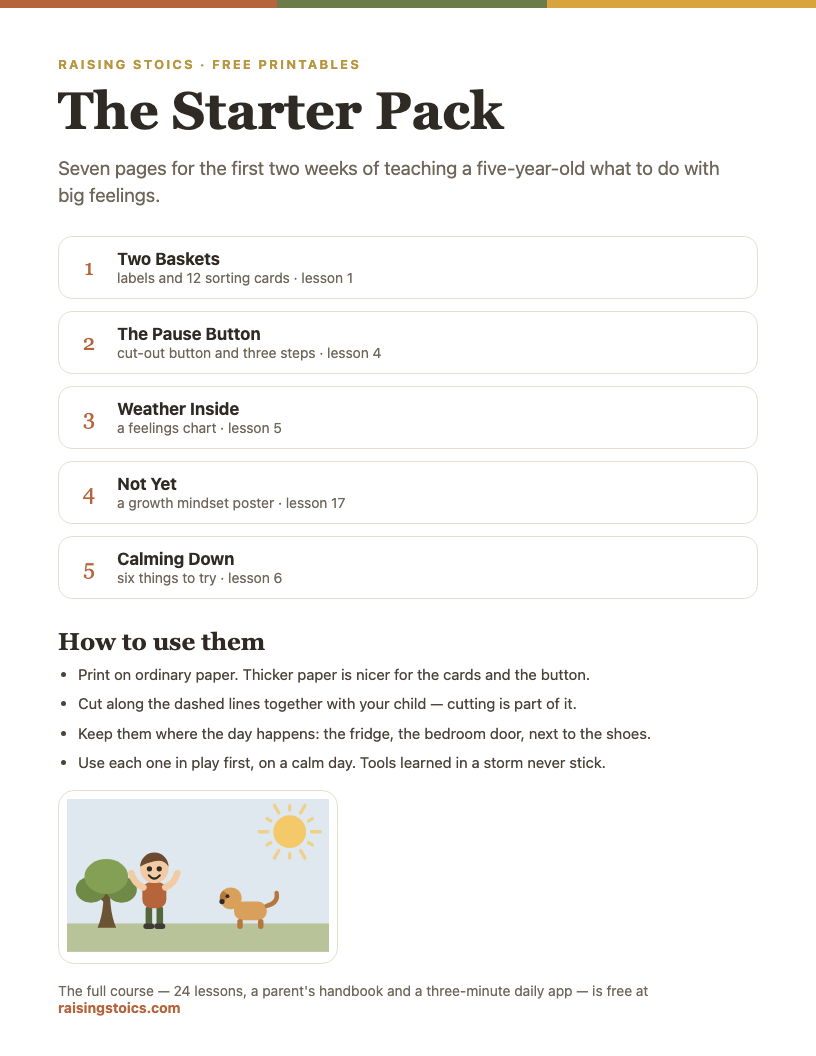
The Big Feelings Starter Pack
Nine pages for the first two weeks: a sorting game, a pause button, a feelings chart and a calm-down poster.
Download the free PDF See all 9 pages
Part of a free 9-page starter pack. Sign in with a code from your email — no password.
What to say instead
Instead of "Stop whining!" or "I can't understand you when you talk like that," try:
- "I can tell you really want it. Can you ask me again in your regular voice?"
- "The rain isn't up to us. What would you like to do inside?"
- "You sound tired. Let's sit together for a minute first."
The goal is the same calm response every time, so whining stops being worth the effort. Waiting is a skill that grows with practice; see how to teach kids patience and our self-control activities for games that help.
When to talk to your pediatrician
Whining on its own is rarely a medical concern. Mention it if it comes with other changes, such as poor sleep, low appetite, frequent crying, or seeming unwell, or if your child seems unhappy most of the time, at home and elsewhere, and it keeps going.
In the program
In our program, this is the lesson "Two Baskets": what's up to me, and what isn't. Children sort things into two baskets and practice the phrase "That's in my basket." A lot of whining is about things in the other basket: the rain, a closed store, a sibling's turn. Sorting helps a child let go of what they can't change and focus on what they can, like asking clearly or choosing something else. Your child's app practices the idea with a short daily mission. See the program, or read more answers to questions parents often ask.
What parents ask
Paraphrased from questions parents often post on Reddit, Mumsnet, BabyCenter, and other parenting forums.
“We cut back on screen time and now my 5-year-old whines about everything. Will it pass?”
Short answer: many parents describe a burst of whining after a change like this, before things settle. Keep the new rule steady, use the same calm phrase each time, "Try again in your regular voice," and have a few things ready to do instead. If the whining comes from tiredness or hunger, meet that first. See screen time rules for kids.
“My kid whines 'I'm bored' all afternoon. Do I have to keep them entertained?”
Short answer: not necessarily. Many parents on forums say a little boredom often turns into play once a child stops waiting for an adult to fix it. Offer a short list of options, such as drawing, building, or a small job, then step back. A child who is used to being entertained may need some time to settle into it.
“When I hold the no, the whining turns into a full meltdown. Should I just give in?”
Short answer: giving in after whining may teach that whining works, so it may show up more often. Say no once, kindly, and stay close while they're disappointed: "The answer is no, and it's okay to be sad." Keep your words few until the storm passes. Our guide to 5-year-old tantrums explains what to do while you wait it out.
“My 5-year-old struggles with change and whines constantly. Does the same approach work?”
Short answer: the basics, such as a calm, predictable response and meeting tiredness or hunger first, may still help, but some children need more support than a single phrase. Whining can also be a sign that something feels hard, like noise or a change in routine. If you work with a therapist or your pediatrician, ask them to help you adapt the plan for your child.
FAQ
Why does my child whine so much?
Most often because they're tired, hungry, bored, or disappointed, and because whining has sometimes worked. Late afternoons, transitions, and days with less one-on-one time can make it worse. Check the basics first, then respond the same calm way each time, so a regular voice gets results and a whine doesn't.
At what age do kids stop whining?
There's no set age. Many children whine less as they get better at waiting and putting feelings into words, but most children still whine sometimes when they're tired or disappointed, and so do adults. Consistent responses at home usually matter more than age.
Should I ignore whining?
Ignore the tone, not the child. Calmly ask for a regular voice and wait, without arguing or giving in to the whine. If your child seems tired, hungry, or upset, meet that need first. When the regular voice comes back, respond warmly and quickly, so it's clear which voice works.
Why does my child whine only with me?
Children often save their hardest moments for the person they feel safest with, and they also notice where whining has worked before. It doesn't mean you're doing something wrong. Using the same calm phrase every time, "Try again in your regular voice," tends to make whining less useful, and less common.
Child Afraid of the Dark? Bedtime Fears and What Helps, Ages 4–7
Child afraid of the dark? Why bedtime fears and nightmares are common at ages 4–7, what parents disagree about, and a calm plan to try tonight.
Read next →The lesson "Two Baskets" helps children sort what's up to them from what isn't, so fewer things are worth whining about.