 Raising
Why Do Kids Lie? What Lying at 4–7 Means and How to Respond
Your child has chocolate on their face and insists they didn't touch the cookies. Why do kids lie, especially at an age when they're so easy to catch? At ages 4–7, saying things that aren't true is common, and it's usually less worrying than it feels.

Why do kids lie at this age?
Short answer: young children most often say things that aren't true to avoid trouble, to get something they want, or because, for some younger children, a wish and a fact can still blur. Researchers who study children's lying describe it as a common part of development, linked to a child realizing that other people don't know everything they know.
A 4- to 7-year-old says a few different kinds of untrue things. Some are pretend: the dragon that broke the lamp. Some are wishful: "Grandma's getting me a puppy." And some are cover-ups, to avoid a parent's anger or a consequence. A child who says things that aren't true isn't necessarily a dishonest person. They're learning, step by step, why the truth matters, and that it's safe to tell it.
What parents argue about
Consequences or connection. On parenting forums, some parents give a firm consequence for every lie, so lying never pays. Others say "don't punish honesty": if telling the truth gets a child in trouble, they may simply get better at hiding things.
Normal or a problem. Some parents treat a 4-year-old's sneaking and fibbing as completely normal for the age. Others worry it's the start of a habit and want to stop it early.
Rules or needs. When a child lies about something like sneaking onto a tablet, some parents tighten the device settings. Others ask what the child was looking for, such as company or something to do.
What gets the most agreement: don't set traps, and ask what's behind the lie.
What to do today
1. Stop asking questions you already know the answer to. Say what you see instead. Say: "I see crumbs on your shirt. Let's talk about the cookies." 2. Make the truth the easy road. Separate the honesty from the mess. Say: "Thank you for telling me. Now let's fix it together." 3. Play a true-or-pretend game. At a calm time, take turns saying things that are true and things that are made up, and guess which is which. Say: "Is that true, or did you make it up? Both are fine in this game."
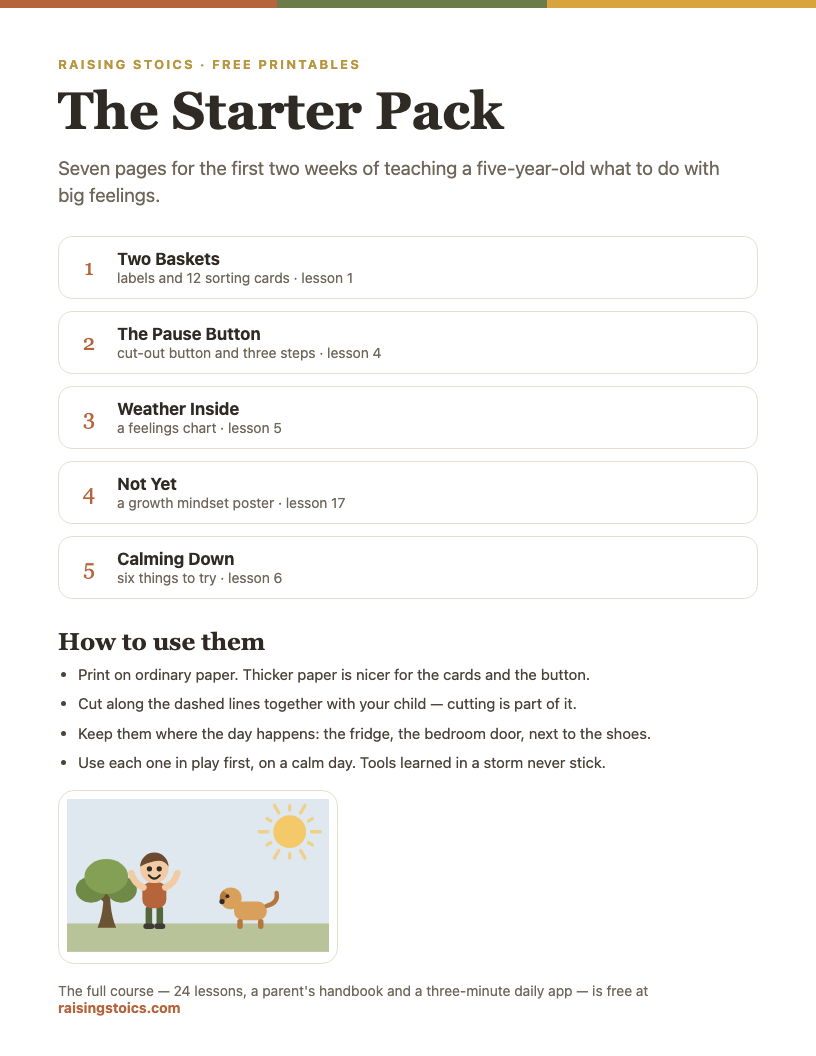
The Big Feelings Starter Pack
Nine pages for the first two weeks: a sorting game, a pause button, a feelings chart and a calm-down poster.
Download the free PDF See all 9 pages
Part of a free 9-page starter pack. Sign in with a code from your email — no password.
What to say in the moment
When you catch a lie, stay calm and keep it short:
- "That sounds like a wish. What really happened?"
- "I'm not going to yell. I want to know the truth."
- "You can take a minute and tell me again."
If a consequence is needed, connect it to the action, not the lie: the marker on the wall gets cleaned up together. And notice honesty out loud when it happens. Owning a mistake is part of teaching kids responsibility, and our guide to making kids listen without yelling covers calm follow-through.
When to talk to your pediatrician
Mention it if lying is frequent and comes with other worries, like aggression, taking things, or trouble at school, or if it's becoming more frequent over time rather than less. Also mention it if your child seems very afraid of getting in trouble. Your pediatrician can help look at what's behind it.
In the program
In our program, the closest lesson is "True or Made Up": checking a fear against the facts. It's built for fears, but its question, "Is it true, or did I make it up?" gives children a calm way to sort real from pretend, without shame. That makes honesty something you can talk about together, not only something they get caught at. Your child's app asks three short evening questions that give them a daily chance to tell you what really happened. See the program, or read more answers to questions parents often ask.
What parents ask
Paraphrased from questions parents often post on Reddit, Mumsnet, BabyCenter, and other parenting forums.
“My 7-year-old sneaks the tablet and then lies about it. What do I do?”
Short answer: there may be two things to deal with: the device and the lie. Keep the tablet in a shared room, with a passcode and limits in its settings, so sneaking is harder. Then say what you saw instead of asking a trick question, and ask what they were looking for, since boredom or wanting company is sometimes behind it. See screen time rules for kids.
“My 4-year-old started sneaking and lying after a new baby arrived. Is it the baby?”
Short answer: it may be part of it. A big family change can bring new behavior, including sneaking and fibbing, and it often eases as things settle. Many parents find that keeping familiar routines and adding a little one-on-one time helps more than overhauling the rules. Stay calm about the lies, and notice honesty out loud when it happens.
“My kid blames their little sister for everything. How do I handle it?”
Short answer: you may not need to find out who did it. Trying to establish the facts can turn every mess into a trial. Move to what happens next instead: "I don't need to know who spilled it. Let's clean it up together." If one child was clearly hurt, take care of them first. See sibling rivalry.
“My child lies about small stuff all day, like brushing their teeth. Do I call out every one?”
Short answer: for small daily things, it may work better to check than to ask. Instead of "Did you brush your teeth?" try "Let's go brush together" or "Show me your toothbrush." That takes away the chance to say something untrue, without a fight. Save talks about honesty for calm moments, and thank them when they tell you the truth.
FAQ
Is it normal for a 5-year-old to be lying?
Yes, it's common. Many 5-year-olds say things that aren't true to avoid trouble, to get something, or because they wish it were true. It usually reflects a growing understanding of what other people know. A calm response, fewer traps, and praise for honesty tend to help more than harsh punishment.
How do I stop my child from lying?
Make the truth safer than the lie. Say what you see instead of asking trick questions, thank your child when they tell the truth, and deal with the problem calmly. If honesty leads to yelling, many children learn to hide things better. Over time, a child who feels safe telling the truth tends to tell it more often.
Should I punish my child for lying?
Focus the consequence on what happened, not on the lie itself. If they drew on the wall, they help clean it. Adding an extra punishment for lying can make the truth feel even riskier next time. Praise honesty when it happens, even when the news is bad.
What's the difference between lying and imagination?
Imaginative stories are told for fun and usually aren't meant to get something or avoid trouble, like a tale about a dragon in the backyard. A lie is meant to make someone believe something untrue, often to avoid a consequence. Young children mix the two, so ask: "Is that a pretend story or a true one?"
5-Year-Old Tantrums: Temper Tantrums at 4–6 and What Helps
5-year-old tantrums and temper tantrums at home: how common they are at 4–6, why they happen, what to do before, during and after, and when to worry.
Read next →The lesson "True or Made Up" helps children sort what's real from what's pretend, a first step toward talking honestly.