 Raising
Kids Copying Behavior From TV: Rude Cartoons and What Helps
One episode, and suddenly your 5-year-old is talking back in a cartoon voice. Kids copying behavior from TV is one of the most common worries on parenting forums and review sites. Here are the facts about the shows parents mention most, and what helps at home.

Why kids copying behavior from TV is so common
Short answer: young children learn a lot by watching and imitating, and a funny line from a favorite character is easy to copy. They may copy the words and the tone without understanding why it was funny on screen.
Psychologists have studied imitation for decades. In Albert Bandura's Bobo doll experiments, begun in 1961, nursery-school children who watched an adult (live or on film) hit an inflatable doll were more likely to imitate that behavior. These were lab studies, not studies of everyday TV. Children ages 4–7 often repeat what gets a laugh or a reaction, and shows are full of both. Copying a phrase doesn't mean a show has changed who your child is. It usually means they're trying it out to see what happens.
What parents argue about
On parenting forums and review sites, the debate is often about specific shows.
PAW Patrol. On r/Mommit, a thread asking what's wrong with PAW Patrol has the most estimated Google search traffic among the subreddit's top threads (Ahrefs, US, October 2026). The series is rated TV-Y in the US. Parent reviews on Common Sense Media range from fast and fun to complaints about simplistic morals. The facts are on our PAW Patrol page.
Bluey, Peppa Pig, PJ Masks, and The Loud House. On Common Sense Media, parent reviews raise different concerns: some say kids copy sass and outbursts from Bluey; others call Peppa Pig a rude role model, point to name-calling in PJ Masks, or flag adult humor and language in The Loud House. Other parents praise the same shows, especially Bluey's play and family moments. Bluey and Peppa Pig are rated TV-Y in the US; see our pages on Bluey and Peppa Pig.
Ban or talk. Some parents ban a show, or a whole brand. Others keep it and talk about what the characters do. Others call shows like this junk food: fine once in a while.
What to do today
1. Watch one episode with them. You'll see what's being copied and when. Say: "Show me your favorite part. What makes it funny?" 2. Talk about the character, not the ban. Ask how the other characters felt. Say: "Everyone laughed at Daddy Pig. Was it funny for him too?" 3. Name the rule for real life. Keep the screen and your home separate. Say: "That's a cartoon voice. At our house, we talk to each other kindly."
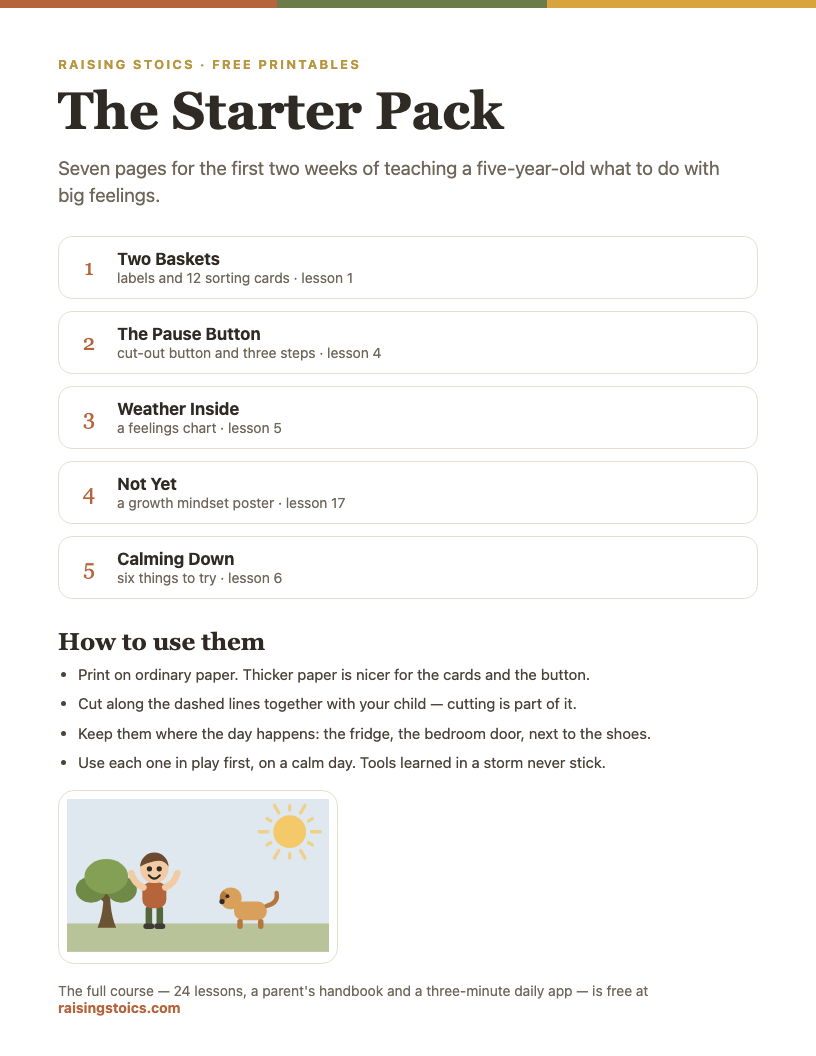
The Big Feelings Starter Pack
Nine pages for the first two weeks: a sorting game, a pause button, a feelings chart and a calm-down poster.
Download the free PDF See all 9 pages
Part of a free 9-page starter pack. Sign in with a code from your email — no password.
What to say in the moment
When a copied line comes out at dinner:
- "That sounds like a line from the show. Try it again in your own words."
- "On TV, everyone laughs. Here, it hurt my feelings."
- "What did you want to tell me?"
Keep your reaction small. A big laugh or a big gasp may make a phrase more likely to come back. For a family plan around shows and devices, see screen time rules for kids.
When to talk to your pediatrician
Copying a show's words is very common and isn't a medical concern on its own. Talk to your pediatrician if aggressive or hurtful behavior is frequent, happens at school as well as at home, or keeps growing despite clear limits, or if a show seems to leave your child frightened or unable to sleep.
In the program
In our program, this is the lesson "It's Not the Thing, It's the Thought": how we see things changes how they feel. Children learn a simple chain: what happened, what I thought, how I felt. It works well for TV, too: "What did Peppa think? How did Daddy Pig feel?" That turns a copied line into a conversation instead of a fight. Your child's app has no feed and ends by itself after a few minutes. See the program, or read more answers to questions parents often ask.
What parents ask
Paraphrased from questions parents often post on Reddit, Mumsnet, BabyCenter, and other parenting forums.
“My 5-year-old copies the shouting and pranks from a YouTube channel. Is that harmful, or just junk?”
Short answer: parents on forums split on this. Many call channels like these junk food: fine once in a while. Others say kids copy the shouting and the pranks. Either way, watch an episode together, talk about how the people on screen felt, and say the rule for real life: "At our house, we talk kindly." For alternatives, see the best YouTube channels for kids.
“My kid picked up swear words from YouTube. How should I react?”
Short answer: many parents find a small, calm reaction works better than a big one, since a gasp may make a word more fun to repeat. Say plainly that it's a word your family doesn't use, without a long lecture. Then check what's being watched: in YouTube Kids, you can approve channels yourself. Our list of YouTube channels for kids walks through the steps.
“Should my 4-year-old watch the same shows as their 8-year-old sibling?”
Short answer: it depends on the show. A TV-Y7 rating means a show is designed for children 7 and older, so it may include more conflict or rougher humor than a TV-Y show. Some families pick shared shows for family time and let the older child watch their own shows while the younger one is busy or asleep.
“My kid acts out superhero fights from cartoons, and someone always ends up hurt.”
Short answer: pretend fighting is common at this age, and many parents set rules for it rather than banning it. For example, superheroes don't touch for real, and the game stops if anyone gets hurt. You can also steer the story toward rescues and teamwork. Asking "How did the bad guy feel?" can turn copying into a conversation.
FAQ
Does TV affect children's behavior?
It can. Young children learn by watching, and they often copy words, tone, and actions they see on screen, especially when a character gets a laugh. What they watch, how much, and whether an adult talks with them about it all play a part. Our research summary on screen time and behavior explains what studies do and don't show.
Which kids' shows do parents write about most?
On Common Sense Media, parent reviews of Bluey, Peppa Pig, PJ Masks, and The Loud House include complaints that children copied rudeness, sass, name-calling, or language. On Reddit, a thread asking what's wrong with PAW Patrol has the most estimated Google search traffic among r/Mommit's top threads (Ahrefs). Many parents also praise these same shows; opinions are divided.
Should I ban a show my child copies?
That's your call, and parents on forums disagree. Some ban a show and see less copying; others keep it and talk about the characters. Watching an episode together first helps you see what's being copied. Whatever you choose, a calm house rule, "we talk kindly to each other," matters more than any single show.
Is Bluey bad for kids' behavior?
We found no study of the show's effect on children's behavior. Bluey is rated TV-Y in the US, meaning it's designed for all children. Some parent reviews say kids copied sass or outbursts; many others praise its play and family moments. Our Bluey page collects the ratings and the episodes that drew criticism.
Kindergarten Behavior Problems: When the Teacher Calls Every Day
Kindergarten behavior problems, frowny faces, and daily calls from the teacher. Why they may happen, what parents disagree on, and three steps to take today.
Read next →The lesson "It's Not the Thing, It's the Thought" gives children a way to talk about what a character thought and how others felt.